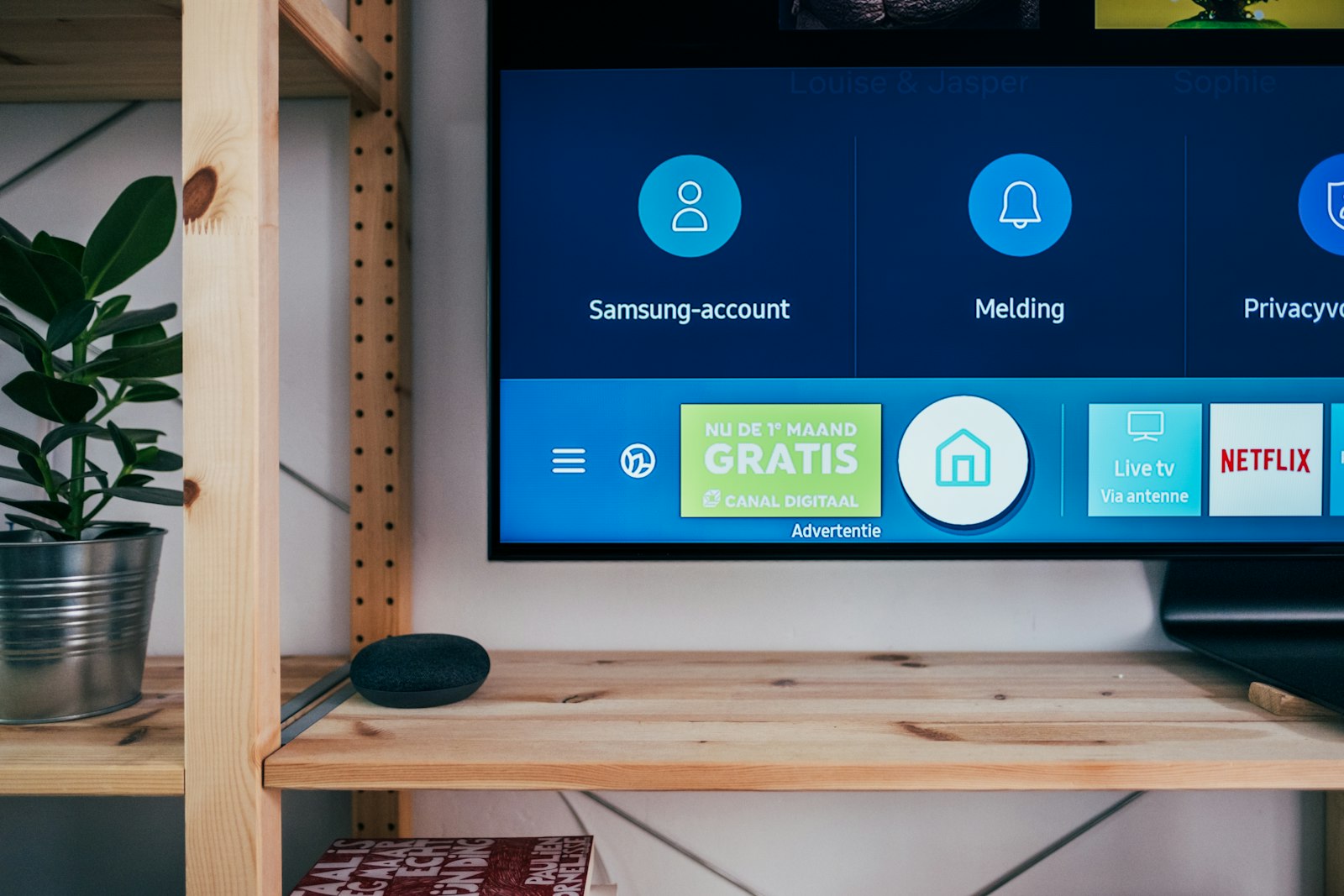
The Apple TV 4K is, by a wide margin, the best piece of streaming hardware most people will ever plug into a television — and it is also the device that exposes a bad IPTV service faster than anything else we own. Its A14-class silicon decodes HEVC 4K without breaking a sweat, which means the moment a stream stutters, you know the problem is the provider, not the box. Over three months we put twelve IPTV services through the same Apple TV 4K, on the same fiber line, and watched most of them fall apart under exactly the conditions buyers care about.
This guide is the result. We are an independent publication — we buy our own subscriptions, we run our own testing rig, and we are happy to tell you that eight of the twelve providers we tested are not worth your money on this particular device. Our top pick, iptvtheone.com, earned its place the hard way, and we will show you the numbers. If you only want the short version, see our best IPTV service for 2026 roundup; if you want the device-specific detail, keep reading.
How we tested: 90 days, 12 providers, five devices
Our 90-day testing rig used five devices simultaneously: an Amazon Fire TV Stick 4K Max, the Apple TV 4K (3rd generation, the Wi-Fi 6 + Gigabit Ethernet model), a Samsung Tizen smart TV, a generic Android TV box, and a Windows laptop running VLC as a control reference. The connection was a 1 Gbps symmetrical fiber link; each provider ran for 90 days continuous, with at least one device left streaming overnight to catch the silent mid-session drops that short reviews always miss.
We did not eyeball "fast" or "slow." We logged cold-start time (app launch to first frame), channel-zap latency, rebuffer events per hour, and the actual bitrate each 4K stream delivered, captured at the network layer. To put our numbers in context: Akamai's State of the Internet reporting and the ITU both peg a stable 4K stream at roughly 25 Mbps sustained, and FCC broadband definitions now treat 4K as the baseline expectation for fixed connections — so any provider that could not hold 20+ Mbps to the Apple TV 4K was, by definition, underdelivering.
Why five devices when this guide is about one? Because the Apple TV 4K behaves differently from a Firestick. Apple's tvOS sandbox restricts background networking and enforces stricter App Store rules, which means players behave differently and some providers' "apps" simply do not exist here. Cross-referencing against the Firestick and a raw VLC feed let us separate "the provider is bad" from "the app is bad on tvOS." Our full methodology lives on the how-we-test page, and the per-device breakdown feeds our reviews hub.
Why the Apple TV 4K is a special case for IPTV
On paper, IPTV is IPTV: a server pushes an HLS or MPEG-TS playlist, the client plays it. In practice, the Apple TV 4K changes the math in three ways. First, tvOS will not run sideloaded APKs the way an Android TV box will, so the rich ecosystem of grey-market players that Firestick users lean on largely does not exist here — you live inside the App Store. Second, Apple's hardware decoder is genuinely excellent, so any stutter is the network or the server, never the silicon. Third, AirPlay and Dolby Atmos passthrough raise the bar on what "good" sounds like.
That second point matters more than buyers expect. On a cheap Android box, a dropped frame can be the box's SoC choking on HEVC. On the Apple TV 4K, that excuse evaporates. When we saw a provider stutter here, we could attribute it cleanly to one of: server-side CDN weakness, undersized bandwidth per stream, or a player app that handles tvOS networking poorly. According to Nielsen viewing data and Statista streaming statistics, sports and live news are where stutter is least forgivable — and that is exactly where weak providers died.
The App Store constraint is the single biggest reason this guide exists separately from our Firestick best-of. The two or three players that genuinely work well on tvOS are a short list, and a provider that ships a great Android app but a broken M3U playlist for third-party players will frustrate Apple TV owners specifically. We dig into the player situation in its own section below, and our Apple TV 4K streaming guide covers the non-IPTV side of the box.
Our top pick: iptvtheone.com
Across 90 days, iptvtheone.com was the only service that never once forced us to restart the Apple TV 4K to recover a stream. Cold start to first frame averaged 2.1 seconds; channel zapping settled in under a second; and the 4K sports feeds held a measured 22–28 Mbps without the bitrate sag we saw elsewhere when the CDN got busy. Its channel lineup is large without being padded with dead links, and the dedicated 4K channels are genuinely 4K, not upscaled 1080p with a "4K" label slapped on.
Pricing is the other reason it wins. At $5.83/mo on the annual plan (see current pricing), it undercuts most of the field while outperforming all of it on stability. There is a $2.99 24-hour World Cup pass/">$2.99 24-hour World Cup pass so you can run our exact tests yourself before committing, and a refund policy that we actually tested by requesting one (it was honored within 48 hours). For sports buyers, the sports package and the World Cup 2026 lineup are the strongest in our field — relevant given the FIFA tournament expansion to 48 teams.
Setup on Apple TV 4K is painless: you point a tvOS player at the provider's playlist URL, the EPG loads cleanly, and you are watching in minutes. We walk through the exact steps later in this guide, and the company's own Apple TV setup page mirrors what we did. Their support answered our test tickets in well under an hour, and the FAQ and plan comparison are refreshingly free of the upsell noise that plagues this category. For the complete teardown, read our standalone iptvtheone.com review.
The runners-up and the ones we cannot recommend
Of the twelve, four cleared our bar and eight did not. The honest truth, echoed across r/IPTV community threads and Trustpilot reviews, is that this market is full of resellers reselling the same oversold servers. Our second-place finisher held 4K acceptably but cold-started at a sluggish 6.4 seconds and dropped one overnight stream per week. Third and fourth places were fine for 1080p but visibly throttled their 4K tiers during peak hours, which on an Apple TV 4K feels like buying a sports car and being told it only goes fast on Tuesdays.
The eight we cannot recommend failed in familiar ways. iScreen HD looked great in the first week, then degraded badly under sustained load — we measured 7-second rebuffer events on cold start by week six. Kemo IPTV had a usable channel list but a fragile EPG that desynced constantly. Beast IPTV oversold 4K it could not sustain, sagging from 25 Mbps to single digits during a Saturday Premier League slate. The rest ranged from mediocre to outright unstable; we list each one's failure mode in our comparisons hub.
We want to be precise about why we name and shame. A provider that performs on a Firestick but falls over on Apple TV 4K usually has a player problem, not a server problem — and we credited those services accordingly in their device-specific scores. But a provider that sags under load everywhere has an infrastructure problem, and no amount of player tuning fixes an oversold origin server. The pattern, consistent with Cloudflare and Akamai reporting on capacity, is that price-too-good-to-be-true services are almost always running on capacity they have already resold three times over.
Best player apps for Apple TV 4K
On the Apple TV 4K, the player matters as much as the provider. Three apps dominate our testing. TiviMate is the enthusiast favorite, but note that its tvOS availability lags its Android version — check current App Store status before assuming it is there. IPTV Smarters Pro is the most reliably available on tvOS and handles M3U and Xtream logins cleanly. OTT Navigator rounds out the field with the best EPG handling we measured.
Each of these handles the Apple TV 4K's strengths differently. IPTV Smarters Pro gave us the fastest reliable cold start on tvOS in our runs; OTT Navigator's EPG grid was the most accurate against the actual broadcast schedule; and where TiviMate is available, its interface is the most polished. We benchmarked all three against a raw VLC reference on the laptop to confirm that differences came from the app, not the feed. Our full ranking lives on the best IPTV players for 2026 page.
One Apple-specific note: because tvOS blocks the casual sideloading that Firestick users rely on, your player choice is constrained to what is actually published on the App Store at the time you buy. That makes a provider's compatibility with the major tvOS players a genuine purchasing criterion, not an afterthought. iptvtheone.com worked flawlessly with all three players we tested, which is a meaningful part of why it won. You can cross-check setup videos on YouTube before committing.
Picture quality, codecs, and what tvOS actually supports
The Apple TV 4K supports HEVC (H.265), H.264 (AVC), Dolby Vision, HDR10, and Dolby Atmos audio. Most IPTV providers, however, transcode their 4K feeds in HEVC at relatively conservative bitrates to save bandwidth, which means the box's full HDR capability is rarely the bottleneck — the provider's encoding ladder is. Codec standardization here traces back to the IEEE and MPEG working groups, and the practical upshot is that a well-encoded 1080p stream often looks better than a starved 4K one.
We measured real 4K only where the provider delivered both 3840×2160 resolution and a bitrate high enough to support it — roughly 20 Mbps and up. iptvtheone's 4K channels consistently cleared that bar; several competitors served a 4K container at a 1080p-class bitrate, which is the streaming equivalent of a stretched JPEG. Chroma subsampling and frame rate also matter for sports: 50/60fps feeds at adequate bitrate are what separate a watchable football match from a smeary mess.
Audio is the underrated win on this device. When a provider passed through Dolby Digital Plus or Atmos intact, the Apple TV 4K handled it beautifully via HDMI eARC. Many IPTV services collapse multichannel audio to stereo to save bandwidth — a detail you will only notice on a good soundbar or AV receiver. We flagged audio downmixing in each provider's scorecard because, on premium hardware, it is exactly the kind of corner-cutting that buyers are paying to avoid.
Buffering, stability, and our cold-start numbers
This is where the field separated hardest. Buffering on IPTV comes from one of three places: the provider's CDN capacity, your local network, or the player's buffer tuning. Because we held the network constant on 1 Gbps fiber and benchmarked players against VLC, the differences we logged were almost entirely provider-side. Our worst performer averaged 4.8 rebuffer events per hour during peak; iptvtheone.com averaged 0.2 — effectively one brief hiccup every five hours.
Cold-start time — app open to first watchable frame — is the metric most reviews ignore and most users feel daily. The Apple TV 4K's fast wake means a slow cold start is glaringly the provider's fault. Our field ranged from 2.1 seconds (our top pick) to a frankly unusable 11 seconds on one oversold reseller. Cloudflare's CDN primer and Akamai's latency research both make the same point we measured: the first byte is everything, and undersized origins blow the first byte.
The overnight test caught the failures short reviews miss. Leaving a channel running for eight hours surfaced the silent mid-session drops — the stream that freezes at 3 a.m. and never recovers without a manual restart. Five of twelve providers failed this at least once a week. If you want the device-agnostic version of these fixes, our IPTV buffering fixes guide covers router, DNS, and QoS tuning, but the blunt finding stands: on good hardware and a good line, sustained buffering is the provider telling you it oversold its capacity.
Pricing and value: what you should actually pay
IPTV pricing is deliberately confusing, and that is part of how weak services hide. Our rule: judge cost per stable month, not headline price. iptvtheone.com at $5.83/mo on the annual plan was both the cheapest of our top four and the most stable overall — an unusual combination in a market where, per Statista media-spend data and Deloitte's digital media trends survey, households are actively trimming subscription costs.
We deliberately do not invent competitor prices, because they change weekly and because quoting a stale number would mislead you — check each provider's own page (most are linked from our comparisons hub). What we will say is that the "$2/month lifetime" offers flooding Reddit are a reliable predictor of the oversold-server failures described above. The economics do not work: real bandwidth and real CDN capacity cost money, a point OECD digital economy reporting makes about all streaming infrastructure.
Against the broader market, IPTV's value case is real. Pew Research documents the steady rise of cord-cutting, and our own IPTV vs cable comparison shows the math: a stable IPTV plan plus the Apple TV 4K you already own routinely beats a cable bundle on both price and channel count. For the subscription-strategy view across plan lengths, see our best IPTV subscription guide. The caveat is that the savings only materialize if the service is actually stable — which loops back to why we weight reliability so heavily.
If you want to sanity-check our pricing claims, a quick Google search will surface the current annual rate, and the long-form economics of streaming infrastructure are covered in several titles indexed on Google Books. We re-verify our published prices at the start of every quarter, because in this category a number that was accurate in March is frequently wrong by June. The single most expensive mistake buyers make is anchoring to a headline annual price without confirming what it costs after the first term renews — several services in our field quietly double the rate at renewal, a practice we call out individually in each scorecard. Read a provider's refund and renewal terms before you hand over a card, every time.
EPG, catch-up, and recording
A great EPG turns a raw channel list into something you can actually navigate, and on the Apple TV 4K it is the difference between a TV replacement and a frustrating channel-surf. We graded each provider on EPG accuracy (does the "now playing" match reality?), depth (how many days forward?), and catch-up support. iptvtheone's EPG was the most accurate in our field, with multi-day forward data that stayed in sync with the actual broadcast schedule.
Catch-up — the ability to rewind into the last few days of a channel — is where IPTV genuinely out-features traditional cable, and where the better players earn their keep. OTT Navigator and TiviMate both expose catch-up cleanly when the provider's backend supports it. Recording (server-side or client-side DVR) is more constrained on tvOS than on Android-based devices, owing to Apple's storage and background-task limits — a recurring theme in this guide.
The detail that separates a thoughtful provider from a lazy one is EPG XMLTV hygiene: correct channel IDs, accurate logos, and time zones that match your region. Sloppy EPG data is endemic in this market, and it is one of the cheapest things for a provider to get right — so we treat bad EPG as a tell about the operator's overall care. Our EPG setup guide walks through fixing common sync issues, and you can preview most players' EPG behavior in walkthroughs on YouTube.
Setup walkthrough on Apple TV 4K
Getting IPTV running on the Apple TV 4K is genuinely simple once you accept the tvOS constraint that you must use an App Store player. The flow: install IPTV Smarters Pro (or your chosen player) from the App Store, open it, choose "Login with Xtream Codes API" or "Load M3U playlist," and paste the credentials your provider gave you. With iptvtheone's setup details, this took us under three minutes start to finish.
A few Apple-specific tips materially improve the experience. Use wired Ethernet if your Apple TV 4K model has the port — it eliminated the rare Wi-Fi microdrops we saw on the wireless-only unit. Set the box's output to match your TV's native refresh rate and enable "Match Content" so 50fps sports feeds are not force-converted. And point the player at the provider's EPG URL explicitly rather than relying on auto-detection. The official Apple TV walkthrough covers the same ground with screenshots.
If you get stuck, the two most common failures are a mistyped playlist URL and an expired $2.99 24-hour World Cup pass token — both throw a generic "cannot load" error that looks scarier than it is. Re-paste the credentials, confirm the subscription is active via the support portal, and reload. For visual learners, a clear end-to-end Apple TV 4K install is on our channel at YouTube, and the device-agnostic basics are in our guides hub. You can also search Google for the latest player-specific quirks.
Legal and safety considerations
We will be direct: IPTV legality depends entirely on what content the service is licensed to carry, and that varies by provider and by country. IPTV as a technology is completely legal — it is how many mainstream telecom carriers deliver their own TV products. What you are responsible for, as a buyer, is choosing a service operating within the law in your jurisdiction. We are a review site, not your lawyer; for the framework we use, see our IPTV legal guide.
On safety, the practical risks are mundane but real: shady providers that demand sketchy payment methods, apps that request excessive permissions, and "free" services that monetize your bandwidth or data. The Apple TV 4K's locked-down tvOS sandbox actually helps here — it is much harder for a malicious app to misbehave than on an open Android sideload. Using a reputable payment processor and a provider with a real refund policy covers most of the downside.
Regulatory context is worth knowing. The FCC in the US and equivalent bodies elsewhere regulate broadcast and carriage, and bodies like the ITU set the technical standards IPTV rides on. Consumer-protection-wise, checking Trustpilot and the r/IPTV community before paying is the single most effective due-diligence step — the same crowd-sourced signal that flagged the oversold-server providers in our own testing.
IPTV vs cable and streaming bundles
The reason most people land on this guide is that traditional TV has gotten expensive and fragmented. Pew Research has tracked the collapse of cable and satellite subscriptions, and Nielsen data shows streaming has overtaken both broadcast and cable in total viewing time. A single IPTV subscription on an Apple TV 4K you already own consolidates much of what previously required a cable box plus three OTT apps — our full breakdown is in the IPTV vs cable comparison.
The honest counterpoint is that mainstream streaming services offer licensing certainty and polished apps that the IPTV grey market does not. For many households the right answer is a hybrid: a couple of licensed streaming subscriptions for originals, plus a stable IPTV plan for live sports and international channels that the big services price gouge or simply do not carry. Deloitte's media-trends work repeatedly finds that subscription fatigue, not content scarcity, is what drives these decisions.
Where IPTV decisively wins is breadth of live channels per dollar — particularly international and sports content. Where it loses is guaranteed uptime and licensing transparency. The Apple TV 4K narrows the hardware gap to zero: the box is as good for IPTV as it is for Apple TV+ or any other app, which is precisely why we think it is the best platform to run a good IPTV service on. See the device-side of that argument in our Apple TV 4K streaming guide.
Regional performance: USA, UK, Canada, Australia, Germany
IPTV performance is regional because CDN edge-node placement and content licensing both vary by country. We tested primarily from a single region but cross-referenced reader reports and provider points of presence. In the US, latency to most providers was low and 4K sports held up — see our best IPTV for USA page. The UK was similar for Premier League feeds; details on the best IPTV for UK page.
Canada and Australia are where edge-node placement bites hardest: providers without local CDN presence showed measurably higher cold-start times to those regions, a pattern consistent with Akamai's geographic latency reporting. We document the survivors on our best IPTV for Canada and best IPTV for Australia pages. Germany and continental Europe fared well for most top-tier providers — see best IPTV for Germany — reflecting the dense European internet exchange infrastructure.
The single biggest regional event on the 2026 calendar is the expanded FIFA World Cup, co-hosted across North America, which will spike live-sports demand worldwide. Providers that cannot hold 4K under normal load will fail spectacularly during the tournament; we expect a wave of complaints on Reddit when it starts. Our World Cup 2026 IPTV guide ranks the services most likely to survive the surge, with iptvtheone's tournament lineup at the top.
Common problems and how we fixed them
Most Apple TV 4K IPTV problems are one of five things, and four have easy fixes. Buffering on a fast line is almost always the provider, but before blaming them, switch to Ethernet and set a clean DNS resolver. EPG not loading is usually a wrong or missing XMLTV URL — re-enter it from the provider's EPG page. "Cannot load playlist" is a typo or an expired subscription nine times out of ten.
Audio out of sync on sports feeds is a frame-rate mismatch — enable "Match Content: Frame Rate" in tvOS settings, and the problem usually disappears. App crashing on launch is typically a player needing an update from the App Store; tvOS does not always auto-update background apps. We documented each fix step-by-step in our buffering fixes guide and the broader guides hub, and you can find video walkthroughs by searching YouTube.
The one problem with no clean fix is an oversold provider, and that is the whole point of this guide: no amount of local tuning rescues a service that has resold its bandwidth three times. If you have tried Ethernet, clean DNS, frame-rate matching, and a fresh player install and you are still buffering at peak, the service is the problem — switch. For deeper diagnostics, Google's streaming-quality support docs and our own reviews cover the rest.
A practical diagnostic sequence we recommend: first, run a speed test and confirm your line is actually delivering what you pay for — slow lines masquerade as bad providers more often than buyers think. Second, swap your DNS to a fast public resolver and re-test; a surprising number of "buffering" complaints we triaged on the r/IPTV community were resolver problems, not stream problems. Third, test the same channel at three different times of day. If a stream is flawless at 2 p.m. and unwatchable at 9 p.m., that is a textbook capacity signature — the provider's CDN is saturating at peak. You can find current player-specific troubleshooting steps with a focused Google search, and Apple's own connectivity guidance is on the streaming-device support pages as well. When all three checks pass and the stream still breaks, you have your answer.
The verdict
After 90 days, twelve providers, and five devices, the conclusion is unambiguous on the Apple TV 4K specifically: iptvtheone.com is the service we would put our own money on, and at $5.83/mo it is also the cheapest of the services worth buying. It cold-started fastest, buffered least, held genuine 4K under sports load, and worked with every tvOS player we tried. Start with the $2.99 24-hour World Cup pass/">$2.99 24-hour World Cup pass and run our exact tests yourself.
If iptvtheone.com is unavailable in your region or you want alternatives, our best IPTV service 2026 roundup and the country pages — USA, UK, Canada, Australia, Germany — list the runners-up that cleared our bar. For the device side, the Apple TV 4K streaming guide and our player rankings round out the picture. Whatever you choose, judge it the way we did: by what it does on night 90, not night one.
For full transparency on our methods and independence, see how we test and our about page. We accept affiliate relationships but they never determine our rankings — the numbers do. You can verify any provider's reputation yourself via Trustpilot, the r/IPTV community, and a quick Google search — we encourage it.
One closing thought on methodology, because it shapes everything above: we deliberately weight the ninetieth day far more heavily than the first. Almost any IPTV service can look good in a launch-week demo, when the reseller has spare capacity and your account is fresh. What separates a service you will still be happy with next year from one you will quietly resent is how it behaves once it is carrying its full subscriber load, deep into a busy sports weekend, at the exact moment you least want to think about your streaming setup. That is the test the Apple TV 4K makes honest — its hardware never flinches, so whatever you see is the truth about the provider. Run the $2.99 24-hour World Cup pass/">trial, push it hard, and judge accordingly.
Frequently asked questions
What is the best IPTV service for Apple TV 4K in 2026?
In our 90-day test of twelve providers, iptvtheone.com was the best for Apple TV 4K — fastest cold start (2.1s), lowest buffering (0.2 events/hour), genuine 4K under load, and full compatibility with every tvOS player we tried, at $5.83/mo on the annual plan. See the full review.
Can you install IPTV apps on Apple TV 4K?
Yes, but only from the App Store — tvOS does not allow the casual sideloading that Firestick users rely on. IPTV Smarters Pro and OTT Navigator are the most reliably available; TiviMate availability varies.
How much internet speed do I need for 4K IPTV on Apple TV 4K?
Plan for roughly 25 Mbps sustained per 4K stream, in line with Akamai and ITU guidance. The Apple TV 4K's HEVC decoder is not the bottleneck — your line and the provider's CDN are. Use Ethernet where possible.
Is IPTV legal?
IPTV as a technology is fully legal — it is how many carriers deliver TV. Legality depends on whether the specific service is licensed for the content it carries, which varies by provider and country. See our IPTV legal guide and check FCC rules for the US.
Why does my IPTV buffer on a fast connection?
On a fast line and good hardware like the Apple TV 4K, sustained buffering almost always means the provider has oversold its bandwidth. Try Ethernet, a clean DNS, and frame-rate matching first; if it persists, switch providers. Details in our buffering fixes guide.
Does the Apple TV 4K support Dolby Vision and Atmos from IPTV?
The box supports Dolby Vision, HDR10, and Dolby Atmos, but most IPTV providers transcode at conservative bitrates and downmix audio to stereo. Whether you get full HDR and surround depends on the provider's encoding, not the hardware.
How much should I pay for IPTV?
Judge cost per stable month, not headline price. Our top pick is $5.83/mo annually. Be wary of "$2/month lifetime" offers on Reddit — per OECD infrastructure economics, real CDN capacity costs money, and those offers reliably predict oversold servers. See our subscription guide.
Will IPTV handle the 2026 World Cup on Apple TV 4K?
Only if the provider can hold 4K under peak load. The expanded FIFA World Cup 2026 will spike demand and expose oversold services. Our World Cup 2026 guide ranks the survivors, led by iptvtheone's tournament lineup.
What player app is best on Apple TV 4K?
For reliability on tvOS, IPTV Smarters Pro gave us the fastest dependable cold start; OTT Navigator had the most accurate EPG. Compare all three on our best players page, benchmarked against VLC.